When an iPad Helps Save an Ancient Language
What the Cherokee Nation’s project can teach any organisation that manages technology at scale
Fewer than 1,500 people speak Cherokee fluently. Set against that number are more than 475,000 citizens of the Cherokee Nation, the largest federally recognized tribal nation in the United States. That gap between the people who speak the language and the people who belong to the community is, arguably, the most urgent generational divide this nation faces today. And they are closing it, in part, with an iPad in hand.
That’s the story Apple tells in its Newsroom: a project that blends oral tradition, technology and a genuinely admirable determination not to let a language disappear. It’s a moving story. But looked at through the eyes of a technology leader, it’s also a very concrete lesson in what happens when hardware, software and a solid device management strategy come together in service of a real purpose.
The story: language warriors with an Apple Pencil in hand
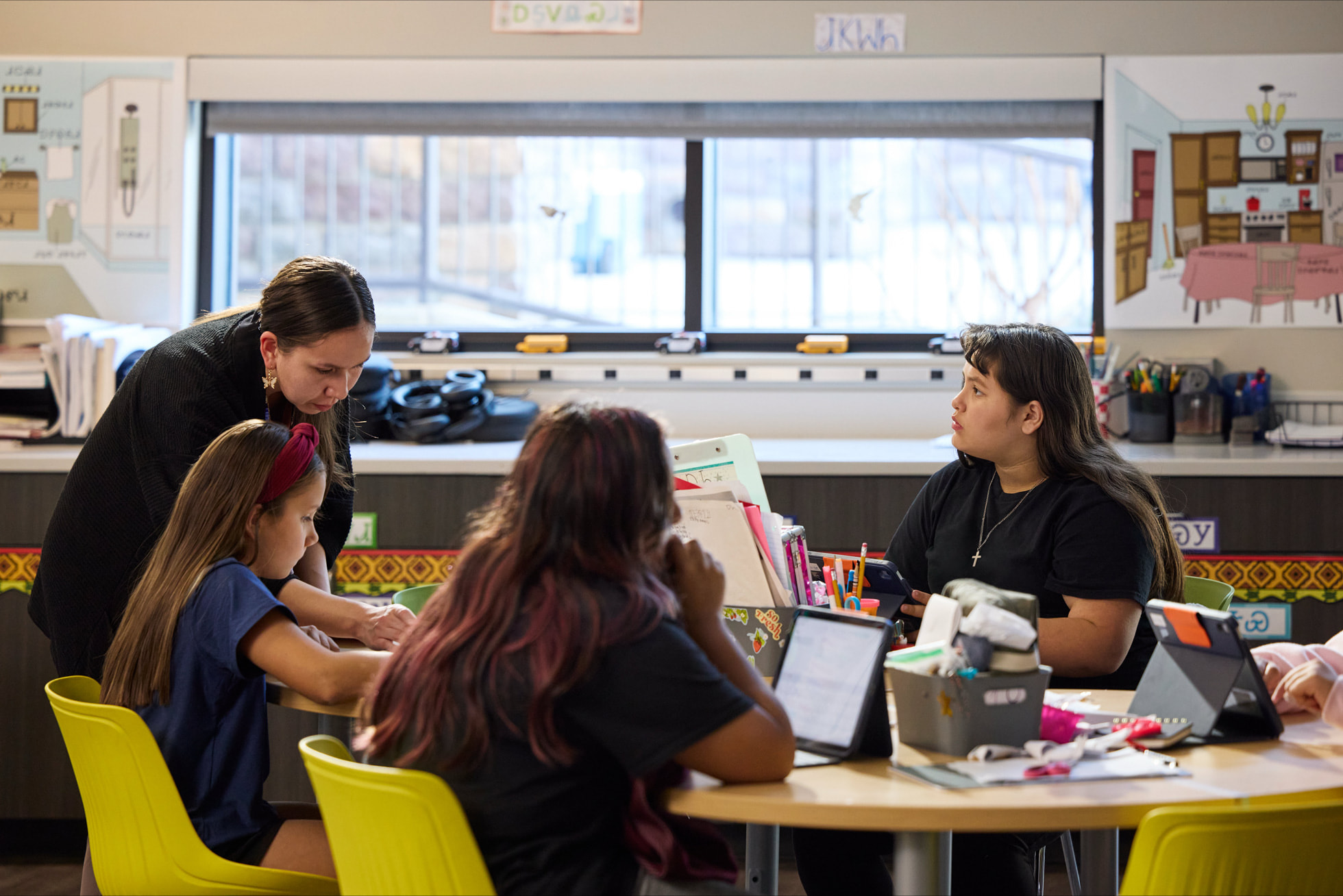
At the Cherokee Immersion School and Sequoyah High School, in Oklahoma, students don’t just study Cherokee: they document it, record it and pass it on to the next generation. The project grew out of a collaboration between Apple, the Cherokee Nation and Oklahoma City University, as part of Apple’s Community Education Initiative.
Fifth-grade teacher Erlinda “Daksi” Soap put it in a way that says a lot about the spirit of the project: her students are “true language warriors.” That’s not a figure of speech. Every pronunciation recording, every podcast, every note taken with Apple Pencil is an act of cultural resilience.
Principal Chief Chuck Hoskin Jr. was just as direct about the device’s role: “the iPad brings together everything we’ve been building here.” And Deputy Chief Bryan Warner added something every IT manager should underline: without this technology, language knowledge wouldn’t be growing at this pace.
The technology behind it: a keyboard with 200 years of memory
The most interesting thing about this project isn’t that it uses iPad and Mac. It’s how it uses them.
- The Cherokee syllabary, built in. The 86 characters that represent the sounds of the language — created more than 200 years ago by Sequoyah — are available on the keyboard of iPhone, iPad and Mac. No third-party apps, no workarounds: the language lives inside the operating system itself.
- Keynote and Freeform, used to build visual materials and concept maps of the language.
- iMovie and GarageBand, used to record and edit podcasts and videos in Cherokee, documenting pronunciation and oral tradition for future generations.
- Swift Playground, so students themselves start coding, closing the loop between ancestral culture and digital skills.
- Apple Pencil, for writing, annotating and practising the syllabary by hand — something we see again and again in digital transformation in education with iPad and Mac: technology doesn’t replace the act of learning, it accompanies it.
The teachers in this project aren’t simply users of the technology: they act as technology ambassadors within their own schools, training other teachers and troubleshooting day-to-day issues. It’s exactly the same role we see when we help educational institutions with their Apple projects: a project like this doesn’t work unless someone inside the organisation carries it forward.
What this means for your organisation, if you’re a CIO or IT manager
It’s easy to read this story as a lovely anecdote about education and culture. But behind every iPad used in a Cherokee classroom sit questions any CIO will recognise:
- How do you manage hundreds of devices spread across several sites, without losing control or security? That’s the classic Apple device management (MDM) problem, and it gets harder when, as in this case, devices move between classroom, home and community activities.
- How do you deploy technology across multiple sites at once, without the IT team having to configure every single iPad by hand? This is where zero-touch deployment comes in: devices that arrive already configured, with the right apps and profiles, ready to use from minute one.
- How do you make sure a keyboard or an app supports a native alphabet, a cultural identity or a minority language? Linguistic accessibility and inclusion isn’t a “nice to have”: for organisations with multilingual teams, international sites or diverse communities, it’s an architectural decision.
- How do you protect that information — recordings, documents, teaching materials — when it forms part of a community’s heritage? Security and project continuity aren’t an afterthought: they’re what guarantees that years of work don’t disappear because a device was poorly managed.
It’s also worth reading why more and more businesses are adopting the Apple ecosystem: the coherence between hardware, software and centralised management is exactly what lets a project like the Cherokee Nation’s scale without becoming unmanageable for the IT team.
How we approach this at Setek
At Setek, we work every day with organisations facing a version of this same challenge: fleets of iPad and Mac that need to be deployed, protected and kept running without absorbing all of the IT team’s time.
With Apple Business and MDM — whether through Jamf or Hexnode — we help schools and businesses deploy devices remotely, apply security policies centrally and provide ongoing technical support, without every incident turning into a site visit. And when a project involves documenting, annotating or creating content — as in the Cherokee Nation’s classrooms — we also help choose and configure the right hardware, including how to take notes and digitise content with iPad efficiently.
Technology as a bridge, not the protagonist
The most valuable part of this story isn’t the iPad or the Mac. It’s what they make possible: a grandmother and her granddaughter sharing a language, a teacher becoming the keeper of an oral tradition, 86 characters created two centuries ago still alive on a modern keyboard. Well-managed technology doesn’t replace the people who carry a project like this forward: it powers their work.
If your organisation is planning to deploy or manage Apple technology at scale — in a school, across multiple sites, or for teams with specific needs — talk to Setek. And if you’d like to keep discovering stories like this one, we’ll see you on our blog.
Key Takeaways
- The Cherokee Nation uses iPads to revitalize the Cherokee language, emphasizing the importance of technology in cultural preservation.
- The project integrates Apple technology, allowing students to document and learn the language with tools like Keynote and GarageBand.
- Effective MDM education is vital for managing multiple devices securely and efficiently across different sites.
- Collaboration with Apple enables zero-touch deployment, making it easier to set up new devices without extensive IT intervention.
- The project illustrates that well-managed technology enhances cultural efforts, rather than substituting the human elements involved.
Estimated reading time: 6 minutes