
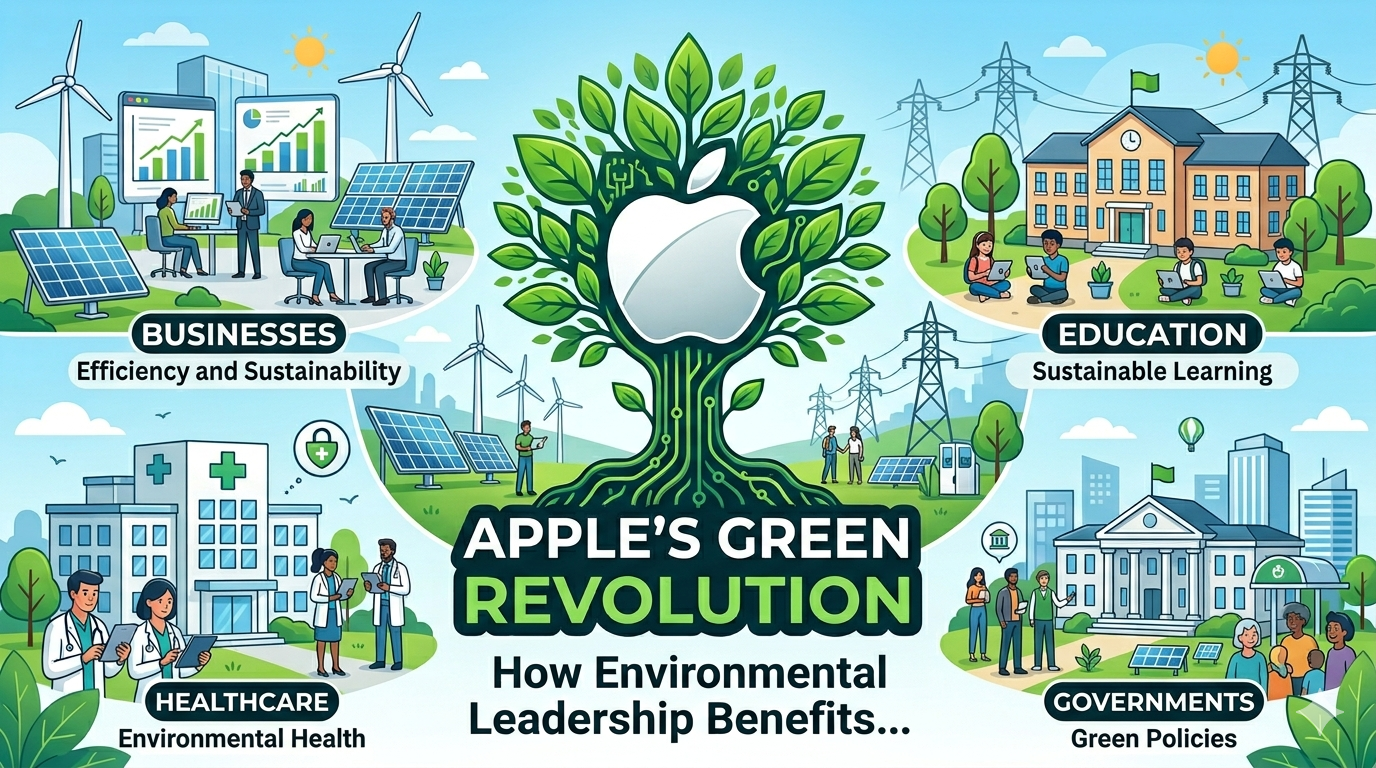
Sustainable technology is transforming the way businesses operate and generate value. More and more technology organisations and consultancies are integrating renewable energies, ethical responsibility and circular models into their strategies. This evolution not only responds to regulatory or social pressure, but also represents a clear opportunity for competitive advantage and responsible reputation within the technology sector.
In the digital era, every action counts. Reducing environmental impact, efficient use of resources and designing sustainable technology infrastructures are essential pillars for making a difference.
At Setek Consultants, we align with Apple and other leading brands to achieve carbon neutrality before 2030. We promote equipment reconditioning, technology leasing and renting, efficient infrastructure design and development of green solutions adapted to companies with a sustainable vision.
Ethical responsibility and good practices
Ethics is at the heart of responsible digital transformation. At Setek Consultants, we adopt principles of transparency, integrity and environmental commitment that guide every project. Our DNA includes diversity, equality and inclusion, creating multidisciplinary teams capable of generating innovative and sustainable ideas. We are committed to digital accessibility, team wellbeing, ongoing training and zero tolerance for unethical practices.
Apple cases in sustainability and business ethics
Apple has consolidated its position as a world leader in sustainability and technological ethics. Among its most notable initiatives: carbon neutrality across its entire value chain by 2030; 100% renewable energy in stores, offices and data centres since 2018; investments in solar projects; use of recycled materials in products including 100% recycled aluminium, copper and cobalt in iPhone and MacBook batteries; innovations like Daisy, the robot that recovers valuable materials from old devices; and commitment to user privacy, ethical AI development and conflict-free material sourcing.
Recommendations for implementing sustainable and ethical solutions
- Define a technology sustainability plan with clear, measurable objectives.
- Invest in renewable energies for your IT infrastructure.
- Apply ethical criteria in hardware and software design, development and procurement.
- Implement renting or leasing models to avoid technology obsolescence.
- Promote diversity, inclusion and digital accessibility in your organisation.
- Evaluate and share sustainability best practices, celebrating achievements.
Want to know how to take your company to the next level combining innovation, sustainability and ethics? Discover more examples and strategies on our blog.
Looking to transform your company with ethical and sustainable technology? Contact Setek Consultants today.
More information on Apple´s environment policy
Key Takeaways
- Sustainability in technology is reshaping business operations and creating competitive advantages.
- Setek Consultants aims for carbon neutrality by 2030 and promotes reconditioning, leasing, and green solutions.
- Ethics and responsibility drive digital transformation, focusing on transparency, diversity, and accessibility.
- Apple leads in sustainability with initiatives like carbon neutrality and 100% renewable energy across its operations.
- Recommendations include defining sustainability plans, investing in renewable energy, and promoting ethical practices.
Estimated reading time: 4 minutes
Apple has committed to becoming carbon neutral across its entire value chain — including manufacturing and product life cycle — by 2030, and has run on 100% renewable energy across its stores, offices, and data centers since 2018. For businesses in Dubai, this model is directly relevant: the UAE’s own Net Zero by 2050 strategy and Dubai Clean Energy Strategy are pushing companies to adopt similar renewable energy and carbon-reduction targets, making Apple’s approach a practical benchmark for local sustainability planning.
Apple’s ethical framework centers on transparency, conflict-free material sourcing, user privacy protection, and responsible AI development. Companies in Dubai looking to strengthen their ESG credentials — increasingly required for free zone licensing, government tenders, and international partnerships — can apply the same principles: publishing clear sustainability commitments, vetting suppliers for ethical sourcing, and embedding diversity and inclusion into corporate governance.
Apple’s circular economy strategy relies on recovering materials (100% recycled aluminum, copper, and cobalt in batteries) using its “Daisy” disassembly robot, alongside device reconditioning and leasing programs that extend hardware lifespan. In Dubai, businesses can apply the same model through IT equipment refurbishment, structured device leasing, and certified e-waste recycling partners, reducing both environmental impact and the total cost of technology ownership.
Sustainability is shifting from a reputational advantage to a regulatory and commercial expectation in the UAE, driven by initiatives like Dubai’s Clean Energy Strategy 2050 and growing ESG disclosure expectations from investors and government entities. Following Apple’s example — setting measurable environmental goals, using renewable energy, and applying ethical procurement — gives Dubai-based companies a credible framework to meet these rising expectations while improving operational efficiency.